
Market Update: The Everything Bubble Is Back. What It Means for Investors
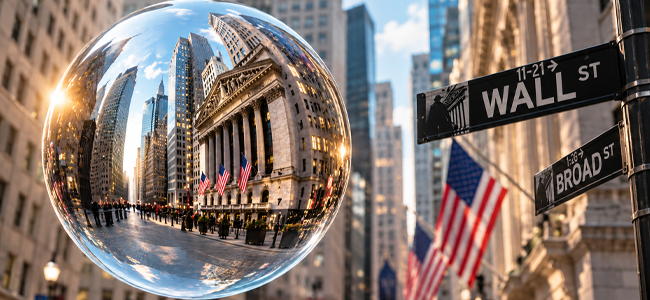
“I can calculate the motions of the heavenly bodies, but not the madness of people.” (Sir Isaac Newton, after losing a fortune in the South Sea Bubble, 1720)
Newton’s post-South Sea Bubble lament in the 17th century feels timely again. This week, market historian Edward Chancellor warned in a Reuters column that the 2021 “Everything Bubble” is back, but with far greater downside risks.
What is the Everything Bubble?
An Everything Bubble forms when easy money lifts almost every asset at once, from shares and crypto to new listings. Prices then rest less on fundamentals than on the belief that someone will pay more for anything in the future. In 2021, Janus Henderson’s Richard Bernstein listed five warning signs months before US equities peaked. Today, all five are flashing again:
- Liquidity: Financial conditions remain almost as loose as at their 2021 trough.
- Leverage: US margin debt is at a record, and zero-day options, leveraged same-day options contracts, make up about half of US options turnover.
- New speculators: Retail apps now offer tokenised private shares and access to prediction markets, blurring investing and gambling.
- New issues: SpaceX raised a record US$75 billion in June, with OpenAI and Anthropic potentially to follow, and SPACs are back.
- Turnover: Average daily US share trading topped US$1 trillion for the first time in January.
Concentration makes this period more dangerous than previous Everything Bubbles. Circular financing among AI players is an ongoing concern, as it depends on continuously accelerating revenue growth, so even a modest slowdown could shake the sector’s performance. The US market is expensive. The S&P 500’s Shiller CAPE, considered the best measure of how expensive stocks are, sits near 41 versus a dot-com peak of 44.
More than the September effect
September is historically the worst month for stocks, but this year’s market jitters have firmer foundations: sticky inflation and rising interest rates. On 23 September, the South African Reserve Bank (SARB) unanimously raised the repo rate by 25 basis points to 7.25%, citing an intensifying fuel-price shock. Bubbles tend to burst when rates rise, and money gets more expensive. This is the main risk investors face for the rest of 2026 and into 2027.
How to navigate the risks
- Stay invested. J.P. Morgan found that an investor who bought at every major market peak since 1990 still ended up with 3.6 times her money (compared with 1.6 times her money if she invested in cash).
- Avoid leverage, which can turn a correction into a forced sale.
- Match money to goals. Keep near-term needs in cash and short-term bonds; let long-term capital ride out volatility.
Markets can stay irrational for longer than investors can stay solvent. The best defence is a plan that does not depend on calling the top.
Please speak to us before making any rash decisions!
*All facts and figures accurate at time of writing.
Disclaimer: The information provided herein should not be used or relied on as professional advice. No liability can be accepted for any errors or omissions nor for any loss or damage arising from reliance upon any information herein. Always contact us for specific and detailed advice.
© FinDotNews
